
Was Marx 'Woke?'
In excoriating Blacks' specific grievances, today's white Leftists reject the revolutionary thinker's ideas on the intersection of race and class struggle

No sooner had the Confederate soldiers fired on the Union fort in Charleston Harbor in the spring of 1861 than President Abraham Lincoln ordered a naval blockade of southern ports, cutting off Britain’s supply of cotton, shutting down nearly 2,650 textile mills in the northern city of Lancashire, and throwing tens of thousands of employees out of work.
The “Cotton Famine,” as it came to be known, produced horrific Dickensian streetscapes of hungry, shoeless children and painted ladies huddling under coal-gas lamps, serpentine lines for soup kitchens and relief funds, and the suddenly brisk trade in household goods at the local pawn shops. While the mill owners lobbied the Queen to recognize the secessionists across the pond, intercede militarily on behalf of the Confederacy, and revitalize the domestic textile industry, their employees gathered in Manchester’s Free Trade Hall in December 1862 to talk it over.
In what I would argue is the greatest expression of whites’ solidarity with nonwhites, jobless British workers in Manchester gazed upon enslaved Blacks in Mississippi and saw neither the Other or a n!$$er but a coworker.
“We would rather perish,” they wrote that night in a letter to President Lincoln, “than be fed by slavery.”
The mill workers’ sacrifice is all the more stunning when you consider that 164 years later many whites on the political Left have joined with their conservative adversaries to denounce as polarizing even vague articulations of the profound racial disparities that characterize all aspects of American public life. In a 2024 interview with the author Christian Parenti, Chris Hedges, a former New York Times’ foreign correspondent and Pulitzer Prize winner, introduces the concept of “wokeness” thusly:
“Woke ideology is pervasive in liberal institutions, especially universities, but does it further or hamper the liberal values and inclusiveness it purports to advocate? It seeks to transform society through what Christian Parenti calls the ‘moralizing micropolitics of politicized etiquette.’ It is fixated on the politics of language and symbols, the sins of cultural appropriation and misnaming and calls for centering historically oppressed groups. It advocates identity politics, prioritizing race, gender, indigeneity, sexual orientation, physical disability, mental health diagnosis, immigration status and socioeconomic status over political content. Woke discourse, Parenti writes, is imbued with a therapeutic mentality expressed in safety-obsessed incantations about harm, trauma, healing care and doing the work. Personal struggles take precedence over political struggles but as Parenti argues, wokeness is deeply anti-intellectual endowed with a moralizing that draws a distinction between the politically clean and unclean, friend and enemy good and evil. It demands the censoring and cancelling of the politically incorrect along with books and ideas. Woke culture has displaced old-fashioned universalist class politics, the fundamental struggles over who produces wealth, how and for whom? It not only divides the working class but often serves the interests of the ruling class.”
Imagine now the British workers applying Hedges’ tortured logic to their plight in 1862. Might they have argued that it was rather the duty of the enslaved population in the Deep South to continue to suffer bondage so that their proletariat brethren in northern England might have jobs?
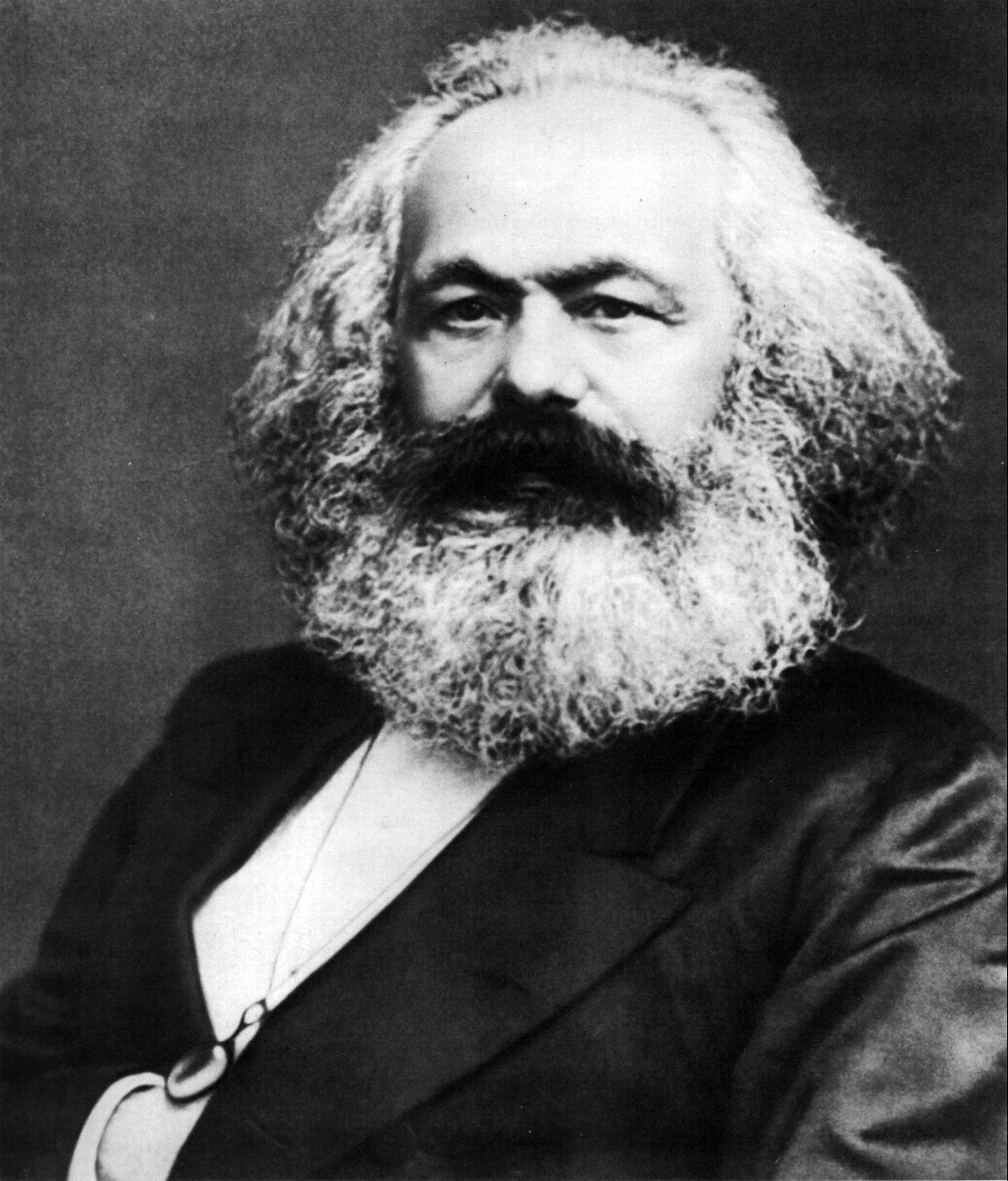
Speaking at a meeting in the spring of 1862, no less an authority on class struggle than Karl Marx told 3,000 trade unionists:
“The English working class has won immortal historical honor for itself by thwarting the repeated attempts of the ruling classes to intervene on behalf of the American slaveholders by its enthusiastic mass meetings, even though the prolongation of the American Civil War subjects a million English workers to the most fearful suffering and privations.”
Owing partly to his experience as a war correspondent for the New York Tribune and Vienna’s Die Presse, Marx’s understanding of U.S. political economy was remarkably astute, and when the guns of war finally fell silent, he took a break from writing the first volume of Das Kapital to pen a letter to white American workers, urging them—out of basic self-interest if nothing else—to include the freedmen in their postbellum plans.
“An injustice to a section of your people has produced such direful results, let that cease. Let your citizens of today be declared free and equal, without reserve. If you fail to give them citizens’ rights, while you demand citizens’ duties, there will yet remain a struggle for the future which may again stain your country with your people’s blood. The eyes of Europe and the world are fixed upon your efforts at reconstruction and enemies are ever ready to sound the knell of the downfall of republican institutions when the slightest chance is given. We warn you then, as brothers in the common cause, to remove every shackle from freedom’s limb, and your victory will be complete.”
It is hard to imagine Marx’s warning falling on deafer ears. What he understood—and white leftists such as Hedges, Parenti, Glenn Greenwald, Krystal Ball and others do not—is that racism is to the proletariat’s struggle what Kryptonite is to Superman, encouraging whites to identify with the bosses, their class enemies, rather than their coworkers simply because they are darker- skinned. In the aftermath of the Civil War, that meant, on a practical level, segregated labor unions pitting whites against Blacks; when one union walked off the job, employers merely hired the other as scabs until the strikers caved and relented in their demands for higher pay.
This enervating pattern held for nearly 70 years until the Congress of Industrial Organizations, or CIO, formed in 1935 for the express purpose of integrating workers of all races into a labor juggernaut that ultimately birthed the civil rights movement.
That ethos of interracial solidarity more or less created the singular achievement of the Industrial Age—a prosperous American working class—that ruled the roost for the next 40 years, seizing more than half of national income for employees in the form of wages. That coalition—tenuous as it was--only began to fray during the economic downturn that began as the bicentennial approached. Reagan finished it off by convincing even more white workers that Blacks—not the bosses—were responsible for their shrinking paychecks.
It was a sucker move, and the white proletariat, in the main, fell for it. As Reagan and then Clinton shifted manufacturing production overseas to lower wages, white workers were subtly instructed to take their share of gross national product from their Black co-workers instead of their employers, in the form of discrimination in the labor market, the growth of a prison industrial state that employed unskilled whites, and financial schemes such as payday loans and subprime mortgages allowing whites to leverage wealth accumulated over generations of homeownership.
The resulting racial inequities are, in fact, the germ of Americans’ discontent, and the anti-intellectualism lay not in identifying them but in denying their importance. As W.E.B. DuBois noted in his classic tome, Black Reconstruction, even on the terms established by monopoly capitalism, southern slaveholders could have exponentially expanded their wealth by freeing their slaves, paying them a nominal amount, then clawing it back in rent, food, and clothing purchased from general stores that they owned.
That financial arrangement is, ironically, precisely what radical organizations such as the League of Revolutionary Black Workers were fighting in their attack on slumlords and their championing of African American political control of their own neighborhoods in the early 1960s and 1970s. But in marginalizing Blacks even more, the post-industrial economy raises two questions that Hedges, Parenti and their ilk have no answer for:
First, how do you cut off Blacks’ buying power without adversely impacting whites’ buying power?;
And secondly, wouldn’t it be prudent for any working-class movement to focus on restoring African American buying power as the predicate for restoring everyone’s buying power?
Perhaps the anti-woke left will better grasp that they are being played for fools if they hear it from Marx rather than a simple darkie like myself. In a letter dated April 1870, Marx tendered an opinion of the “Irish question” for two friends living in New York that could easily have doubled as a diagnosis of America’s “Negro question,” with Irish workers standing in for African Americans and English laborers as proxies for their Yankee counterparts. He wrote:
“And most important of all! All English industrial and commercial centres now possess a working-class split into two hostile camps: English proletarians and Irish proletarians. The ordinary English worker hates the Irish worker because he sees in him a competitor who lowers his standard of life. Compared with the Irish worker he feels himself a member of the ruling nation and for this very reason he makes himself into a tool of the aristocrats and capitalists against Ireland and thus strengthens their domination over himself. He cherishes religious, social and national prejudices against the Irish worker. His attitude is much the same as that of the ‘poor whites’ towards the ‘niggers’ in the former slave states of the American Union. The Irishman pays him back with interest in his own money. He sees in the English worker both the accomplice and the stupid tool of English rule in Ireland. This antagonism is artificially sustained and intensified by the press, the pulpit, the comic papers, in short, by all the means at the disposal of the ruling classes. This antagonism is the secret of the impotence of the English working class, despite its organisation. It is the secret which enables the capitalist class to maintain its power, as this class is perfectly aware.”
Excellent, thank you! In this dark season, this lit up my heart and my brain in a most welcome way. (The Kryptonite line is fire.)
Thank you Jon! 100% correct in every way. That Marx guy was pretty smart. I will never understand why so many people think of Hedges as a comrade. HE'S NOT... he's just another MOR white dude working inside the system. And we all know how well *that* tactic works.